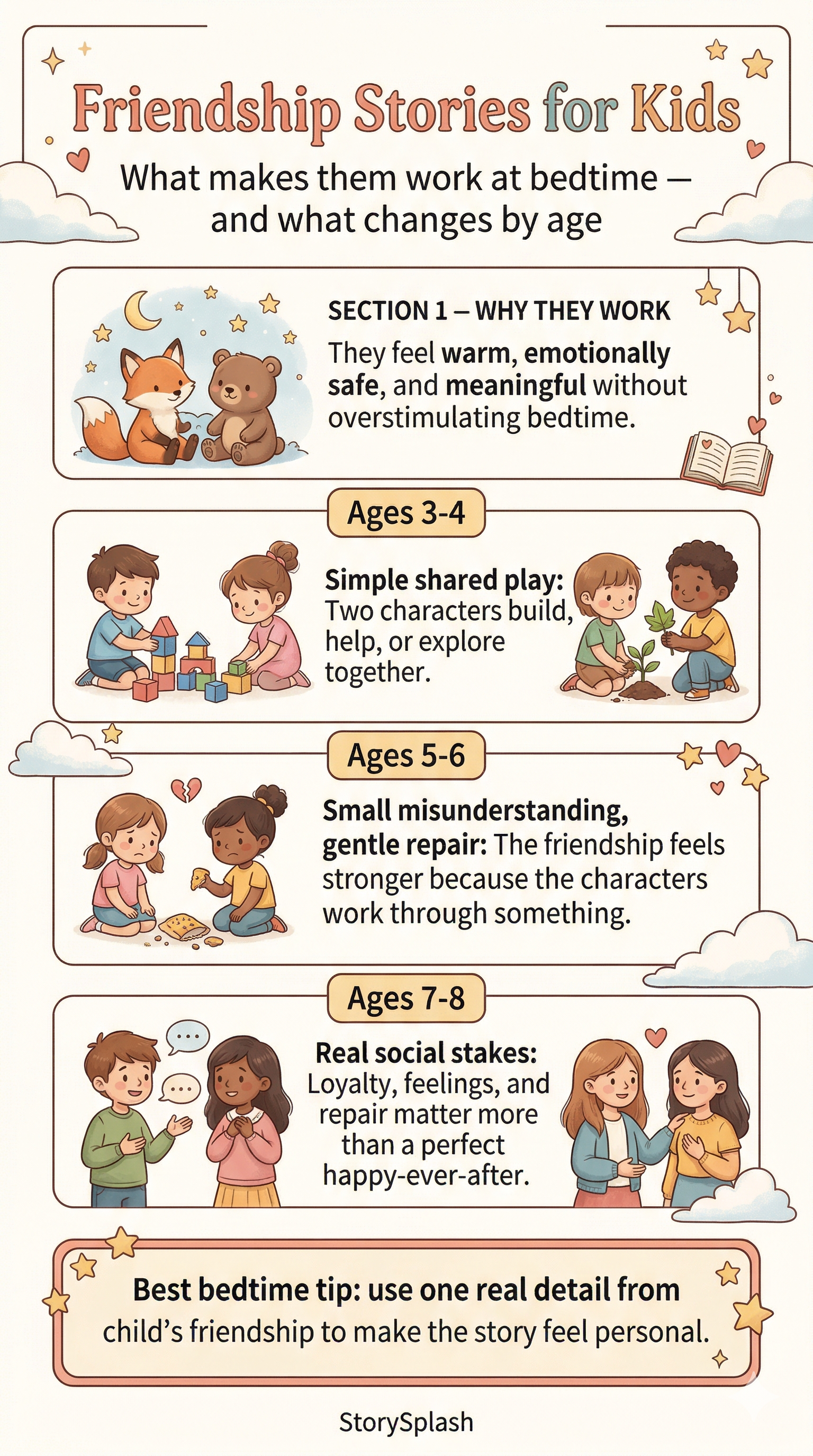
Friendship is one of the safest, warmest story themes you can bring into bedtime. It gives children something emotionally interesting to follow without the intensity of a scary adventure or the overstimulation of a cliffhanger. The friendship stories kids ask for again are usually the ones where the relationship feels real.
Why Friendship Stories Work So Well at Night
Children process social life through story more easily than through direct advice. A lecture about being kind or including others usually gets a polite nod. A story about two children who misunderstand each other, work it out, and end the night closer than before does more lasting work.
That is part of why friendship stories fit bedtime so naturally. They are emotionally meaningful without being sharp or activating. The child gets to follow a connection being built, repaired, or deepened, and the story ends with the comfort of belonging.
Practical tip: If your child is having a hard week with school friendships, choose a friendship story that loosely echoes the feeling rather than copying the exact situation.
What Friendship Stories Look Like at Different Ages
At ages 3-4, friendship stories work best when they are simple and concrete. Two characters build something together, help each other, or solve a small problem side by side. The emotional lesson is in the shared experience, not the dialogue.
At ages 5-6, children are ready for a misunderstanding in the middle. One friend gets left out, one makes the wrong assumption, one feels hurt, and the repair matters more than the problem itself.
By ages 7-8, the strongest friendship stories reflect real social pressure. A third character changes the dynamic. A choice has to be made. The story feels true because the friendship is tested and then rebuilt.
Practical tip: For older children, the most satisfying ending is not “they stayed best friends forever.” It is showing what a real apology and repair actually look like.
The Details That Make a Friendship Story Feel Real
Specificity matters more than plot. A child will remember two friends who always collect shiny stones together or who argue over who gets to hold the flashlight. They will not remember two generic “best friends” who are simply kind all the time.
The same is true for dialogue. Friendship stories land when the characters sound like actual children, not tiny adults explaining values to each other. A little messiness makes the relationship believable.
If you already know your child loves other story themes, this is a good place to blend them. A friendship story can easily overlap with space stories for kids or adventure stories for kids while still keeping the emotional center on the relationship.
Practical tip: Before you start, ask your child what they and their best friend always do together. One real detail makes the whole story feel personal.
When the Story Feels Like Your Child’s Own
Friendship stories become even stronger when your child recognizes themselves in the center of the story. A named hero who is shy at first, curious in the middle, and proud by the end creates a very different kind of attention from a generic character doing the same things.
That is why StorySplash’s friendship stories work well at bedtime. The child is not just hearing about a friendship. They are stepping into one, with a world and tone that match what they are ready for that night.
Practical tip: If your child wants the same friendship story theme night after night, keep the emotional shape and change the setting. Familiar feeling, new details.
Don’t have time to tell this story tonight? StorySplash generates it for you in 30 seconds.