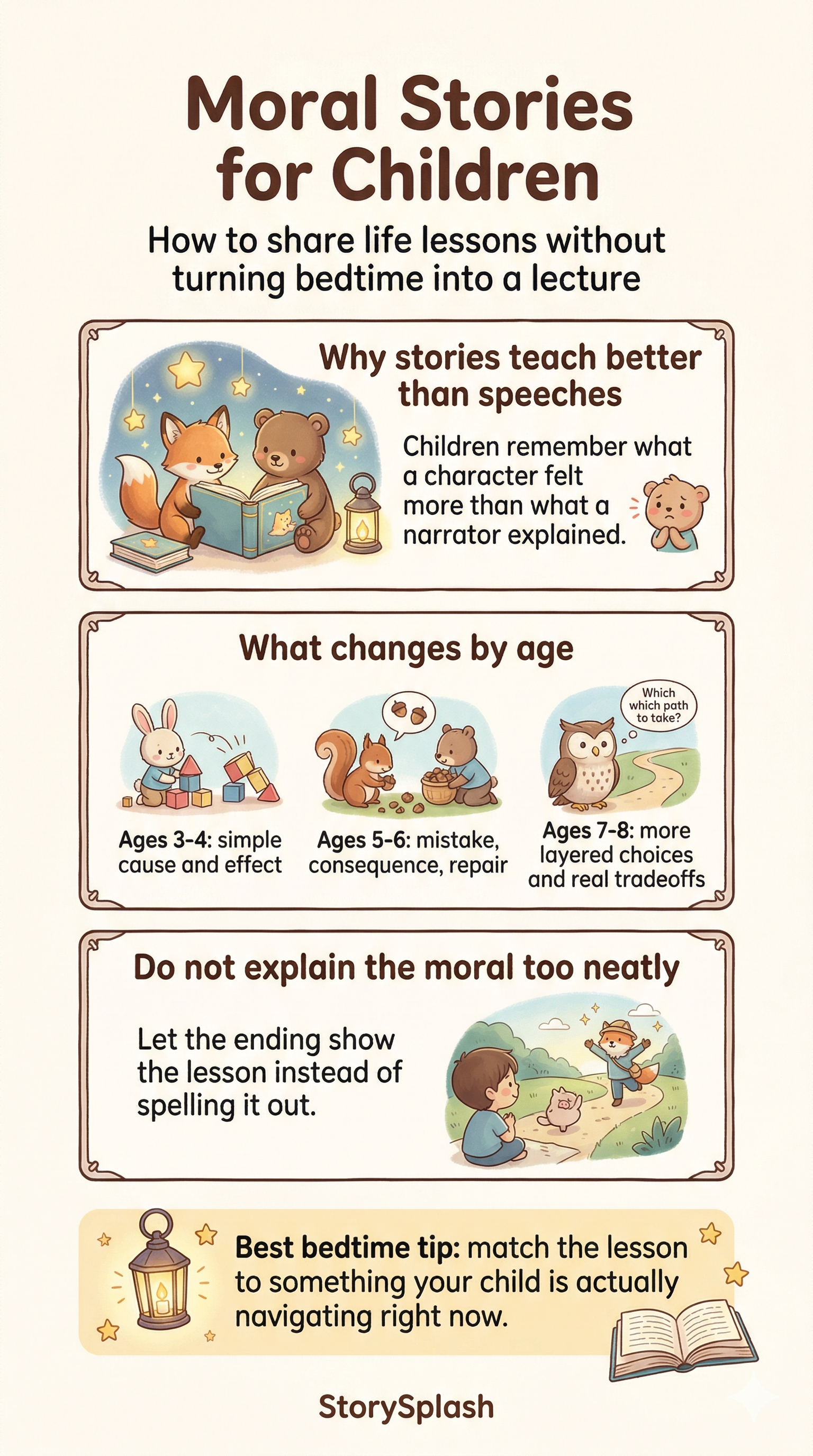
Many children pull away from “moral stories” for the same reason adults do. They can feel the lesson coming from a mile away. The stories that actually work are not the ones that explain the value. They are the ones that let a character live through it.
Why Stories Teach Values Better Than Speeches
When a parent says, “You should tell the truth,” the child hears the rule. When a character tells a lie, feels the discomfort of it, and finds a way back to honesty, the child gets to experience the value from the inside.
That difference matters at bedtime. Children are more open to feeling their way through a story than to being corrected at the end of a long day. A gentle story lets them process the lesson without needing to defend themselves.
Practical tip: After a moral story, resist the urge to summarize the lesson for your child. If the story worked, they already felt it.
Moral Stories Need to Change as Kids Grow
At ages 3-4, moral stories work best when the lesson is simple and visible. Someone shares. Someone tells the truth. Someone helps. The consequence follows closely behind the choice.
At ages 5-6, the stories can hold a real mistake in the middle. The character wants something, makes the wrong call, and then has to repair what happened.
By ages 7-8, the strongest moral stories include competing pressures. A character wants to be loyal and honest. A choice costs something. That is when the story starts to feel closer to real life.
Practical tip: Match the lesson to what your child is dealing with now. A story about fairness lands differently when the issue is actually alive in their world.
The Mistake That Makes Moral Stories Fall Flat
The most common problem is that the lesson gets spelled out too neatly. “And that is why we should always be kind” may be true, but it weakens the story. The child no longer gets to arrive there themselves.
Stories are stronger when the ending shows the shift instead of naming it. The friend is welcomed back in. The hard truth brings relief. The brave choice costs something but feels right.
If your child also enjoys other emotionally rich themes, moral stories can overlap naturally with friendship stories for kids because values are often most visible inside relationships.
Practical tip: End the story with the emotional result, not a final explanation.
When the Lesson Feels Personal
Moral stories hit differently when the child can imagine themselves as the character making the choice. That is where personalization helps. The lesson does not feel imported from outside. It feels like something the child just lived through in story form.
StorySplash’s moral stories work well for this because the child stays at the center of the action while the tone stays gentle enough for bedtime.
Practical tip: If your child is navigating a specific issue at school, borrow the emotional shape of the problem, not the exact details.
Don’t have time to tell this story tonight? StorySplash generates it for you in 30 seconds.