Six-year-olds are old enough to argue their way through almost any routine you set. They remember last Tuesday’s exception. They know which parent is more likely to say yes. They can produce a convincing case for why tonight should be different.
The good news is that six-year-olds also respond well to structure they helped shape — and to routines that give them a small amount of genuine control. Here is what works.
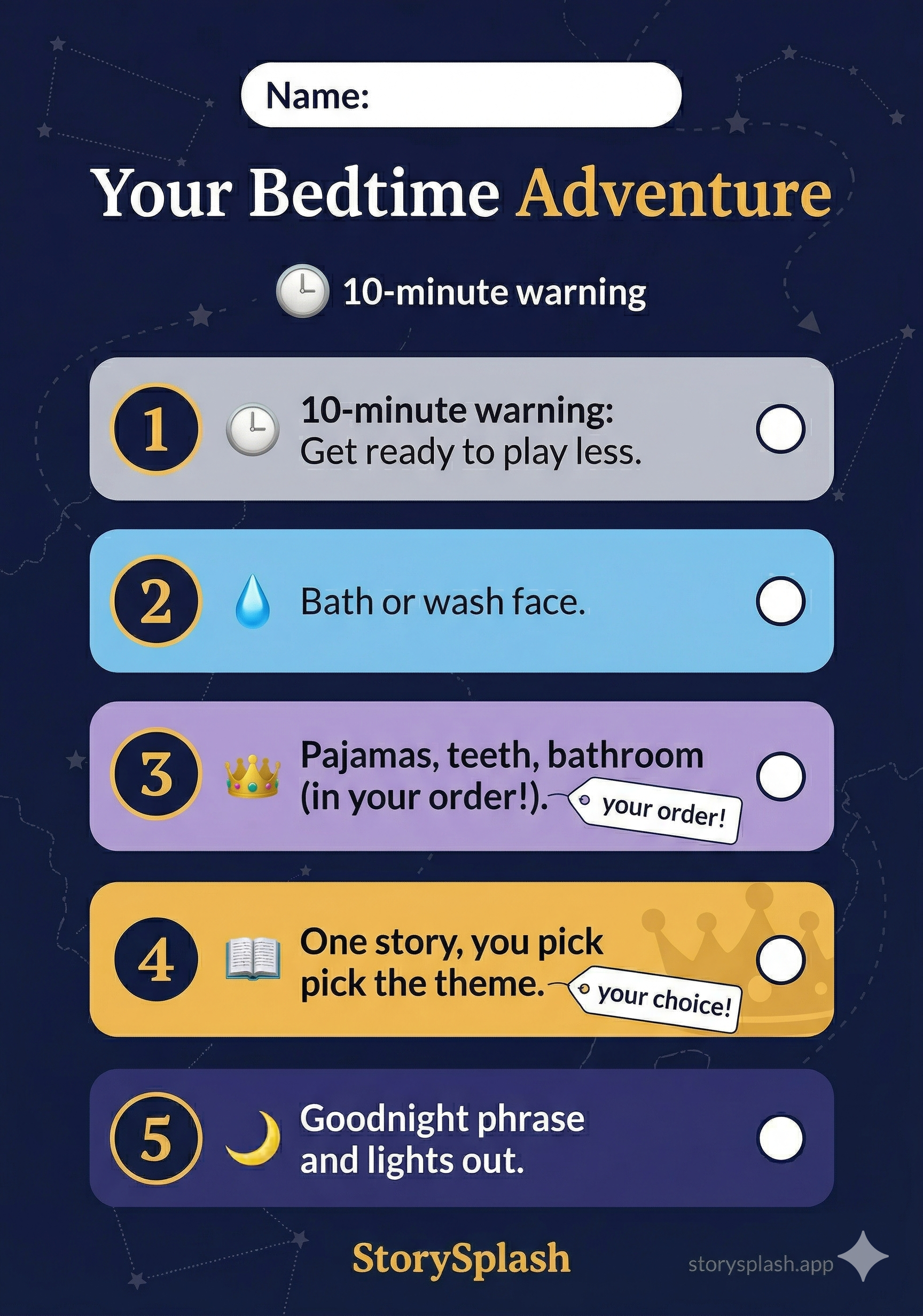
There is a free printable below if you want to put it on the wall.
Why Six-Year-Olds Resist Bedtime Differently Than Toddlers
Toddlers resist bedtime because they are dysregulated and impulsive. Six-year-olds resist it strategically. They understand time, they understand negotiation, and they have learned which arguments work.
The most effective approach at this age is not to overpower that logic — it is to make the structure clear enough that there is nothing left to negotiate. A routine they helped set up and can see on the wall is harder to argue with than one that lives in your head.
Practical tip: Explain the routine once, calmly, on a weekend afternoon away from bedtime. Explaining it away from the moment means there is no argument energy mixed into the explanation.
A 20-Minute Bedtime Routine for 6-Year-Olds
The key is building small genuine choices into the fixed sequence. Your child controls the flavour of the routine; you control the structure.
| Step | What to do | Target time |
|---|---|---|
| 1 | 10-minute warning before starting | Before starting |
| 2 | Bath or wash face | 5 minutes |
| 3 | Pajamas, teeth, bathroom (child’s order) | 6 minutes |
| 4 | One story — child picks the theme | 8 minutes |
| 5 | Goodnight phrase, lights out | 1 minute |
The same goodnight phrase every night is important. By week three, your child will start to settle just hearing the phrase begin.
Practical tip: Put the routine chart somewhere your child can see it from their bed. Pointing to the chart replaces the need to repeat instructions out loud every night.
The Story Anchor at Age Six
At six, the story is the most powerful step in the routine. Your child is old enough to hold a narrative in their head as they drift off — they are still processing what happened, imagining what comes next, inhabiting the world you just described together. That mental activity is genuinely sleep-inducing.
Compare this to falling asleep after a video game or screen with no ending: there is nothing to resolve, just stimulation cut off. The story gives the wind-down process somewhere to go.
Let your child pick the story theme each night — space, dragons, forest, or ocean — but hold the limit at one story, always. The choice gives them ownership of the routine; the limit gives you bedtime.
Practical tip: When your child asks for more, use the same answer every time: “One story, then sleep.” Consistency here is the entire mechanism. A single exception teaches them to ask every night.
Handling the Most Common Six-Year-Old Stall Tactics
“Just one more chapter.” Hold to one story, always. Consistency is what makes the routine work — one exception undoes weeks of progress.
“I’m not tired.” You do not need to be tired to lie quietly in the dark. The job at bedtime is not forcing sleep — it is creating the conditions for sleep to arrive. “You don’t have to sleep, but it is quiet time now” removes the argument.
“I need water / the bathroom / my other stuffed animal.” Build all of these into the routine as fixed steps before the story begins. By the time the story starts, everything has been handled.
Practical tip: Preview tomorrow morning when you say goodnight. “Tomorrow we can do that” gives your child something to look forward to and signals that tomorrow actually comes — which makes tonight feel more finite.
StorySplash generates a new personalized story for your child in about two minutes — the story step done quickly, even on the nights when nothing else is going to plan. Try it free on iOS.